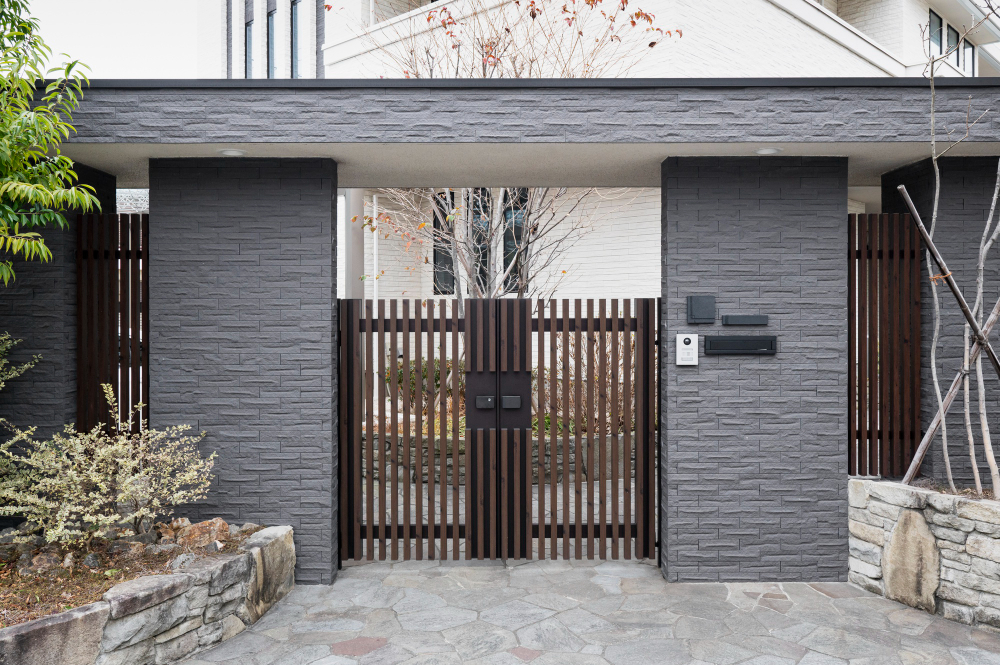
A hybrid fence combines Petrified Forest Boise's proprietary concrete posts with North American cedar panels, pairing the structural durability of concrete with the warm, traditional look of wood. The concrete posts are manufactured in-house, rated to withstand wind speeds up to 115 miles per hour, and covered by a lifetime warranty, so the part of the fence doing the structural work won't rot, warp, or sag the way an all-wood post eventually does. The cedar panels are sustainably sourced and naturally resistant to insects and decay, giving the fence a traditional appearance without asking the entire structure to rely on wood. Homeowners can choose from a range of custom colors for the concrete components, which makes it easier to match a hybrid fence to a home's exterior or an HOA's requirements. If you like the look of a wood fence but not the maintenance schedule that comes with it, here's how a hybrid fence actually compares.
What a Hybrid Fence Actually Combines
A hybrid fence isn't a compromise between two materials so much as a division of labor between them. Petrified Forest Boise builds the structural core, the posts, out of its proprietary concrete blend, manufactured in-house at the company's own facility. The visible panels between those posts are North American cedar, sustainably sourced and chosen specifically for its warm, natural appearance. Each material is doing the job it's actually good at instead of being asked to do everything.
This is different from a standard concrete fence, which uses concrete for both the structural posts and the visible panels. A hybrid fence keeps the concrete where the durability matters most and brings in cedar where the aesthetic matters most, which is part of why it's become a popular middle option for homeowners who want a traditional wood look without a traditional wood fence's long-term maintenance.
That division of labor is also why a hybrid fence tends to hold up well against Idaho's specific seasonal challenges. The structural elements aren't asked to weather the same freeze-thaw and moisture exposure that eventually compromises an all-wood post, while the cedar panels are only responsible for the visual layer of the fence rather than the load-bearing work underneath it.
Why the Concrete Half Matters More Than It Looks Like It Should
It's easy to look at a hybrid fence and focus on the cedar, since that's the part you see and touch most. But the concrete posts are doing the heavy lifting, literally. They're rated to withstand wind speeds up to 115 miles per hour, which covers the kind of spring wind events that routinely damage all-wood fencing across the Treasure Valley. They also won't rot, warp, or sag the way a wood post eventually will, especially at ground level where moisture does the most damage over time.
That structural reliability is backed by a lifetime warranty on the concrete posts. Because the posts are manufactured in-house using Petrified Forest Boise's own proprietary blend and mold, the company controls that part of the process from casting to installation, a track record that goes back to the company's founding in 2004 and is a big part of why it can stand behind that warranty without hesitation.
What Cedar Brings to the Design
Cedar earns its place in a hybrid fence for reasons beyond looks, even though the look is a big part of the appeal. The wood is naturally resistant to insects and decay, which means it holds up better than most other wood species even before any additional treatment. It's also sustainably sourced, so the material choice lines up with a lower environmental footprint than some alternatives.
Over time, cedar panels weather in a way that most homeowners find attractive rather than distracting, developing a richer, more textured look compared to day one. Because the structural posts are concrete rather than wood, the panels themselves are the only part of the fence dealing with direct weather exposure at that level, which simplifies what actually needs attention down the road compared to an all-wood system where every post and panel is equally exposed.
Custom Colors and What the Warranty Actually Covers
Hybrid fences are available in a range of custom colors on the concrete components, so the posts can be finished to match a home's exterior, a subdivision's HOA requirements, or a property's existing hardscaping rather than defaulting to a single industrial look. That flexibility is one of the more underrated parts of choosing a hybrid system, since it lets you keep the cedar's natural tone while still controlling how the structural elements read visually.
It's worth being clear about what the lifetime warranty actually covers on a hybrid fence: the concrete posts and structural components. The cedar panels are a different material with a different maintenance profile, so if you're comparing a hybrid fence against a full concrete fence or a rail fence, it helps to ask specifically which parts of any system are under warranty rather than assuming the whole structure carries identical coverage.
See a Hybrid Fence in Person Before You Decide
Petrified Forest Boise's mobile showroom brings real concrete color samples and cedar panel samples right to your property.
Request Your Free On-Site EstimateHow a Hybrid Fence Compares to an All-Wood Fence
According to HGTV, a wood fence can last up to 20 years with proper maintenance, and that maintenance is the operative word. Staining, sealing, and replacing individual boards is an ongoing responsibility for every post and panel in an all-wood system. A hybrid fence narrows that maintenance burden down to just the cedar panels, since the structural posts don't need any of that upkeep to remain sound.
The trade-off is straightforward: an all-wood fence is typically a simpler, more familiar system to price and install, while a hybrid fence asks for a bit more upfront in exchange for a structural system that's rated for Idaho's wind and won't fail at the post level the way wood eventually does.
What to Expect During a Hybrid Fence Installation
A hybrid fence project starts the same way every Petrified Forest Boise installation does, with a free on-site estimate and a mobile showroom visit. That's especially useful for a hybrid system, since you're evaluating two materials at once: the concrete post color and finish, and the cedar panel's natural grain and tone. Seeing both in person on your own property gives you a much better sense of the finished look than a catalog photo can.
From there, builder permits and utility locations are handled as part of the fence services that come standard with every installation, and the concrete posts go through the same in-house manufacturing as the company's standalone concrete fence line. Installation is handled by crews who've completed the same year-long apprenticeship under a master craftsman used across every fence type the company builds, so the standard doesn't change just because two materials are involved instead of one.
Cost Considerations Worth Understanding Upfront
A hybrid fence generally sits between an all-wood fence and a full concrete fence in terms of upfront cost, since it combines an in-house manufactured structural system with a separately sourced wood panel material. That's a reasonable trade-off for homeowners who specifically want the cedar look but don't want to give up the durability and warranty coverage that comes with a concrete structural system.
As with any fence project, the most accurate way to understand what a hybrid fence will cost on your specific property is a free on-site estimate rather than a general price range, since fence length, gate count, and site conditions all factor into the final number just as much as material choice does.
Is a Hybrid Fence a Fit for Your Property?
A hybrid fence tends to make the most sense for homeowners who specifically want a wood aesthetic but are tired of, or trying to avoid, the maintenance cycle that comes with an all-wood fence. It's also a strong fit for HOA communities that have specific appearance requirements, since the custom color options on the concrete posts make it easier to meet those standards while still delivering a natural cedar look.
If wind resistance, low maintenance, and long-term durability matter more to you than the traditional wood look, a full concrete fence may be the simpler choice. But if you want both durability and a warmer, more traditional appearance in the same fence, a hybrid fence is built specifically to deliver that balance.
Not Sure If Hybrid or Concrete Is the Better Fit?
Talk through your property with a Certified Buckley Fence Installer and compare your real options.
Call or Text (208) 738-9154What Maintenance Actually Looks Like Year to Year
Because the structural posts are concrete rather than wood, a hybrid fence's maintenance conversation is really just a conversation about the cedar panels. Cedar's natural resistance to insects and decay means it holds up well without constant attention, and the panels are generally designed to be refreshed or replaced well down the line, often in the range of 15 to 20 years, while the concrete post structure underneath remains sound and doesn't need to be touched.
That's a meaningfully different maintenance rhythm than an all-wood fence, where every post and panel in the system is aging and weathering at the same rate. With a hybrid fence, you're only ever really managing one material's timeline instead of two.
What a Hybrid Fence Does for Property Value
A fence is one of the more visible improvements a property can make, and it's worth thinking about a hybrid fence as an investment rather than just an expense. According to LawnStarter, a professionally installed fence can raise property value by as much as 10%. A hybrid fence's combination of a traditional, attractive appearance with a structurally durable, lifetime-warrantied post system supports that kind of value case better than a fence that will visibly age or need replacement within a decade.
That's particularly relevant if you're weighing a hybrid fence against a lower-cost all-wood option while planning to sell the property at some point. A fence that still looks and performs well years later tends to support a stronger impression than one that's clearly due for a maintenance cycle.
Hybrid Fencing Across Different Property Styles
A hybrid fence's custom color options make it flexible across a wider range of property styles than a single fixed material could manage on its own. Newer subdivisions with specific HOA aesthetic requirements often lean toward concrete post colors that closely match trim or masonry on the home itself, while more rural or established properties sometimes prefer a color that lets the cedar panels stand out as the visual focus.
That flexibility is part of why hybrid fencing has become a common choice across a range of property types in the Treasure Valley, from newer residential developments to older properties transitioning away from a wood fence that's reached the end of its practical lifespan.
Frequently Asked Questions
The posts are Petrified Forest Boise's proprietary concrete blend, manufactured in-house and rated to withstand wind speeds up to 115 miles per hour. The cedar you see is limited to the panels between the posts.
Cedar is naturally resistant to insects and decay, so it needs less attention than most wood species. Because the structural posts are concrete rather than wood, the panels are also the only part of the system exposed to weather at that structural level.
The lifetime warranty applies to the concrete posts and structural components. The cedar panels are a separate material with their own maintenance profile, which is worth clarifying whenever you're comparing warranty coverage across fence types.
Yes. The concrete posts are available in a range of custom colors, so you can coordinate the structural elements with your home's exterior or an HOA's requirements while keeping the cedar's natural tone on the panels.
Yes. The custom color options and traditional cedar appearance make hybrid fencing a common fit for HOA neighborhoods that have specific requirements around fence appearance.


