
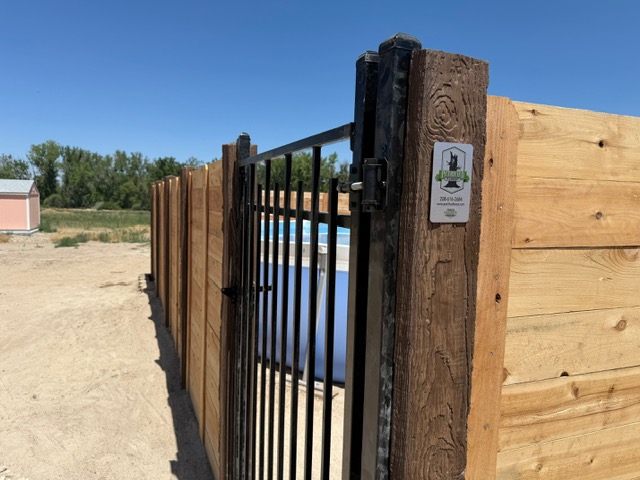
A hybrid fence generally costs more upfront than an all-cedar or vinyl fence because it combines Petrified Forest Boise's in-house manufactured concrete posts, rated to withstand 115 mile-per-hour winds and backed by a lifetime warranty, with North American cedar panels for the visible surface. That higher starting cost buys a structural system that won't rot, warp, or sag the way an all-wood post eventually does, which changes the long-term math even though the day-one number is different. Cedar fencing alone typically costs less to install but comes without a lifetime warranty and requires the same ongoing maintenance any wood fence needs. Vinyl fencing sits in a different category altogether, with its own cost and durability trade-offs that don't directly compare to either wood or a concrete-based hybrid system. If you're weighing a hybrid fence against cedar or vinyl on cost alone, here's what that comparison actually looks like once you factor in the whole picture, including maintenance, warranty coverage, and how each material actually performs in Idaho's climate over time.
Why a Hybrid Fence Costs More Than an All-Cedar Fence Upfront
A hybrid fence's cost reflects two separate material systems working together: Petrified Forest Boise's proprietary concrete posts, manufactured in-house, and North American cedar panels for the visible surface. An all-cedar fence, by comparison, is a single material system throughout, which is generally simpler and less expensive to produce and install.
That difference in complexity is the primary reason a hybrid fence typically costs more than an all-cedar option at the point of installation. You're paying for the concrete manufacturing process on top of the cedar material, rather than just the cedar alone.
It's a bit like comparing a composite deck post system to an all-wood deck, the composite version costs more upfront specifically because it's solving a durability problem the all-wood version doesn't address, and that added cost is concentrated in the part of the system doing the structural work.
What That Upfront Premium Actually Buys
The premium on a hybrid fence buys a structural post system that's rated to withstand wind speeds up to 115 miles per hour and backed by a lifetime warranty. Concrete posts won't rot, warp, or sag the way wood posts eventually do, especially at ground level where moisture causes the most damage over time. That's a meaningful difference for the part of the fence actually doing the structural work.
It also buys consistency. Because the posts are manufactured in-house using the same proprietary blend on every project, you're getting the same structural performance regardless of which specific property the fence is installed on, rather than variability that can come with individual wood posts sourced from different lumber batches.
That consistency matters more than it might seem when you're comparing a single quote in isolation. It's the difference between a fence system engineered to a specification and one that's assembled from whatever lumber happened to be available that week.
What You're Trading Away With an All-Cedar Fence
An all-cedar fence is a reasonable, lower-cost option, but it comes without the structural benefits a hybrid fence's concrete posts provide. Every post in an all-cedar system faces the same freeze-thaw cycling, moisture exposure, and wind stress that concrete posts are specifically engineered to resist, which means the whole fence is managing the same maintenance and lifespan considerations rather than just the panels.
According to HGTV, a wood fence can last up to 20 years with proper maintenance, and that maintenance applies to every post and panel in an all-cedar system, not just a portion of it. That's the trade-off for the lower upfront cost.
It's a genuinely fair trade for some homeowners, particularly those planning a shorter stay in the property or working within a tighter budget for the current project.
Where Vinyl Fits Into This Comparison
Vinyl fencing is often marketed as a low-maintenance alternative to wood, and it does avoid some of wood's specific issues like rot and insect damage. But vinyl isn't manufactured in-house by Petrified Forest Boise and doesn't carry the same lifetime warranty or wind rating a concrete fence does, which puts it in a different category rather than a direct substitute for a hybrid fence.
Vinyl also doesn't offer the same natural aesthetic that cedar panels provide. If the traditional wood look is part of what you're after, a hybrid fence's cedar panels deliver that in a way vinyl generally doesn't attempt to replicate.
Compare Real Numbers for Your Property
See hybrid, cedar, and concrete pricing side by side with a free on-site estimate and mobile showroom visit.
Request Your Free On-Site EstimateThe Long-Term Math: Maintenance and Replacement Costs
The real comparison between a hybrid fence and an all-cedar fence isn't the installation invoice, it's the total cost over the years you own the property. An all-cedar fence requires ongoing staining, sealing, and board or post replacement to hit anywhere close to that 20-year HGTV figure. A hybrid fence limits that maintenance conversation to just the cedar panels, since the concrete posts underneath don't need any of that attention to remain structurally sound.
Cedar panels on a hybrid fence are generally expected to be refreshed or replaced somewhere in the range of 15 to 20 years, while the concrete post structure remains intact. That's a narrower, more predictable maintenance cycle than managing an entire all-wood system.
The Property Value Angle Worth Factoring In
According to LawnStarter, a professionally installed fence can raise property value by as much as 10%. A hybrid fence that still looks and performs well years after installation supports that value case more convincingly than a fence that's visibly aging, warping, or clearly overdue for maintenance.
This is particularly relevant if you're planning to sell the property at some point, since a fence in a state of obvious disrepair tends to work against a home's overall impression rather than adding to it.
Deciding What Makes Sense for Your Property
If minimizing upfront cost is the priority and you're comfortable with an ongoing wood maintenance schedule, an all-cedar fence is a reasonable choice. If you want the traditional cedar look with a structural system that's rated for Idaho's wind and backed by a lifetime warranty, a hybrid fence is built specifically for that balance. And if durability and minimal maintenance matter more than the wood aesthetic at all, a full concrete fence may be worth comparing as well.
The most accurate way to compare actual numbers for your specific property is a free on-site estimate, since fence length, gate count, and site conditions affect the final cost of any of these options just as much as material choice does. There's no universally correct answer here, only the one that fits your specific budget, timeline, and priorities.
How Regional Wind and Climate Factor Into the Investment
Idaho's spring wind events and freeze-thaw winters are a real factor in how this cost comparison plays out over time. An all-cedar fence's posts face the same wind and moisture stress a hybrid fence's concrete posts are specifically engineered to resist, which means the cedar option's real-world durability tends to fall short of its cost advantage once a few Treasure Valley seasons have passed.
That's not a knock on cedar as a material, it's simply a function of asking wood to do structural work in a climate that's actively working against it. A hybrid fence's concrete posts absorb that climate stress instead, which is part of why the investment tends to look better in year eight or ten than it might look on installation day.
Common Scenarios Where a Hybrid Fence Pays Off
A hybrid fence tends to make the most financial sense for homeowners planning to stay in a property long enough to feel the difference in maintenance and durability, generally longer than five to seven years. For a shorter ownership horizon, the upfront savings of an all-cedar fence may outweigh the long-term durability benefit, simply because you won't be the one dealing with the maintenance cycle down the road.
It also tends to pay off on properties with larger, more exposed fence runs, where more linear footage means more posts exposed to wind and moisture stress, and therefore more potential points of failure in an all-wood system compared to a hybrid one.
Not Sure Which Material Fits Your Budget?
Talk through the trade-offs directly with a Certified Buckley Fence Installer.
Call or Text (208) 738-9154Why Installation Quality Matters Just as Much for Hybrid Fencing
A hybrid fence's value depends on both materials being installed correctly, which means installer training matters here just as much as it does for a standard concrete fence. Every Petrified Forest Boise crew member completes a full year of hands-on training under a master craftsman, covering both the concrete post installation and the cedar panel work that makes up a hybrid system, a standard that applies across the company's fence services more broadly.
Getting post depth and alignment right is what allows the concrete structure to deliver its full 115 mph wind rating in practice, not just on paper. A hybrid fence installed by an inexperienced crew risks undermining the exact durability advantage that justifies its higher upfront cost compared to an all-cedar option.
Budgeting for a Hybrid Fence Project Realistically
The most reliable way to understand hybrid fence cost for your specific property is a free on-site estimate, since fence length, gate count, color selection, and site conditions all affect the final number just as much as the base material choice does. Petrified Forest Boise's mobile showroom lets you see real concrete and cedar samples together before committing to a design, and past customer experiences are worth a look while you're deciding.
It's also worth asking about the current 10% project discount during that conversation, since it applies to hybrid fencing the same way it applies to the company's other fence lines.
Questions Worth Asking on Any Hybrid Fence Quote
When comparing hybrid fence quotes, ask specifically whether the concrete posts are manufactured in-house or sourced externally, what the wind rating is for the structural system, and whether the warranty covers the posts, the cedar panels, or both. A quote that's silent on any of these details isn't giving you enough information to make a fair comparison against Petrified Forest Boise's offering.
It's also worth asking directly about the source and grade of the cedar being used, since not all cedar panels are created equal, and the natural insect and decay resistance that makes cedar a good fit for this application depends on using genuine North American cedar rather than a lower-grade substitute.
Getting clear, specific answers to these questions before comparing prices puts you in a much better position to understand what you're actually paying for, rather than comparing two numbers that represent fundamentally different levels of quality and coverage.
Whichever material you land on, the goal is the same: a fence that matches your budget today without creating a bigger maintenance or replacement bill for whoever owns the property a decade from now.
Frequently Asked Questions
Generally yes, since a hybrid fence combines in-house manufactured concrete posts with cedar panels, while an all-cedar fence is a single, simpler material system.
A structural post system rated to withstand wind speeds up to 115 miles per hour, backed by a lifetime warranty, and manufactured in-house for consistent quality.
Not really. Vinyl avoids some of wood's issues but doesn't carry the same lifetime warranty, wind rating, or cedar aesthetic that a hybrid fence offers.
An all-cedar fence requires ongoing maintenance across every post and panel. A hybrid fence narrows that maintenance to just the cedar panels, since the concrete posts don't need the same attention.
According to LawnStarter, a professionally installed fence can raise property value by up to 10%. A hybrid fence that maintains its appearance and structure longer tends to support that value more consistently over time.


