Concrete outperforms both wood and vinyl fencing across nearly every measure that matters in the Treasure Valley: it won't rot, warp, or sag, it's rated to withstand wind speeds up to 115 miles per hour, and it's backed by a lifetime warranty from Petrified Forest Boise. Wood remains the most familiar and often the lowest-cost option upfront, but according to HGTV it lasts up to 20 years with proper, ongoing maintenance, a real commitment in a climate defined by freeze-thaw winters and dry summers. Vinyl fencing avoids some of wood's specific problems, like rot and insect damage, but it isn't manufactured in-house by Petrified Forest Boise and doesn't carry the same wind rating or warranty coverage the company's concrete-based products do. Each material has a real place depending on budget, maintenance tolerance, and how long you plan to own the property. Here's an honest, side-by-side look at how concrete, wood, and vinyl actually perform in Idaho conditions.
What Actually Matters When Comparing Fence Materials
Most fence material comparisons focus on upfront price, but that's only one variable in a much bigger equation. The more useful comparison looks at structural durability, maintenance requirements, wind and weather performance, and what kind of warranty coverage, if any, backs the material once it's installed. A cheaper fence that needs frequent attention or fails in a spring storm isn't actually a better value than a more expensive one that doesn't.
Idaho's climate makes this comparison more consequential than it might be in a milder region. Freeze-thaw cycling, dry summer heat, and spring wind events all put real stress on a fence over the course of a year, and different materials hold up to that stress very differently.
How Concrete Performs Over the Long Run
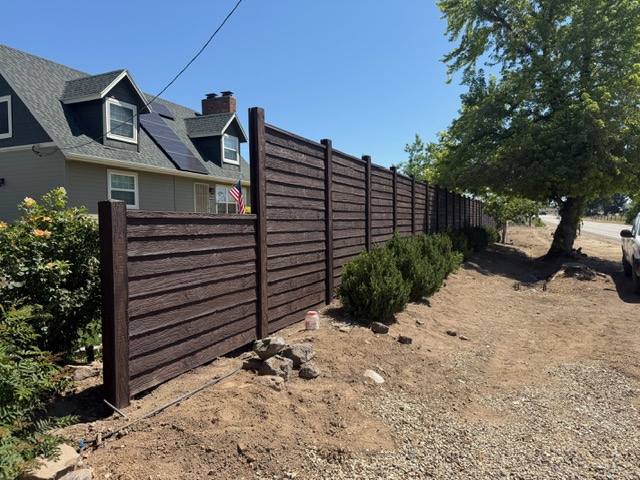
A concrete fence from Petrified Forest Boise is manufactured in-house using a proprietary blend and mold, engineered to withstand wind speeds up to 115 miles per hour, and backed by a lifetime warranty on its structural components. It won't rot, warp, or sag, which removes the two failure points, moisture damage at ground level and UV-driven warping above ground, that eventually affect every wood fence in this climate.
Concrete is also fire-proof and maintains its structural integrity and color consistency for decades, which is part of why the company describes its fences as promised to last 50 years. Custom color options mean this durability doesn't come at the expense of curb appeal.
How Wood Performs Over the Long Run
According to HGTV, a wood fence can last up to 20 years with proper maintenance, which includes regular staining, sealing, and replacing individual boards or posts as they fail. That maintenance schedule is a real, ongoing commitment, and skipping seasons tends to shorten the realistic lifespan well below that 20-year figure.
Wood's specific vulnerabilities in the Treasure Valley are well documented: freeze-thaw cycling works posts loose underground, dry summer heat and UV exposure crack and warp boards above ground, and spring wind events put structural stress on posts that have already been weakened by the first two. Wood remains a genuinely workable choice for homeowners willing to stay on top of that schedule.
How Vinyl Performs Over the Long Run
Vinyl fencing is often marketed as a maintenance-free alternative to wood, and it does avoid rot and insect damage since it isn't an organic material. It generally requires less day-to-day attention than wood, which is a real advantage for homeowners trying to minimize upkeep.
What vinyl doesn't offer is the same structural engineering or warranty backing that a concrete or hybrid fence provides. Vinyl panels can become brittle in extreme cold and can crack or blow out under strong wind loads, which matters directly given the spring wind events that are a regular part of the Treasure Valley calendar.
How the Three Materials Compare on Cost
Wood and vinyl generally cost less than concrete upfront, which is the main reason they remain popular choices for budget-conscious projects. Concrete's higher installation cost reflects its in-house manufacturing process and the lifetime warranty and wind rating that come with it, a genuinely different value proposition than either alternative.
The more complete cost comparison accounts for maintenance and replacement over time. A wood fence's staining, sealing, and board replacement costs accumulate over its lifespan, while a concrete fence backed by a lifetime warranty removes nearly all of that recurring expense from the picture.
Compare All Three Materials in Person
See real concrete, hybrid, and rail samples against your own property with a free on-site estimate.
Request Your Free On-Site EstimateWhich Material Actually Fits Your Property
If minimizing upfront cost is the priority and you're comfortable with ongoing maintenance, wood remains a reasonable choice. If you want lower maintenance than wood without concrete's higher investment, vinyl is worth considering, understanding its wind and cold-weather limitations. If durability, wind resistance, and a lifetime warranty matter most, concrete is the clear standout among the three.
For homeowners who want concrete's durability with a more traditional wood appearance, a hybrid fence pairs concrete posts with cedar panels, which is worth comparing directly against a straightforward concrete or wood decision.
Getting a Real Comparison for Your Property
The most useful way to compare these materials isn't a spec sheet, it's seeing real samples on your own property. Petrified Forest Boise's fence services include a free on-site estimate with a mobile showroom, so you can compare concrete, hybrid, and rail options directly against wood or vinyl before making a decision.
Bring your specific priorities to that conversation, whether that's minimizing long-term maintenance, hitting a specific budget, or matching an HOA requirement, so the comparison reflects what actually matters for your situation rather than a generic recommendation.
Why This Comparison Holds True Across the Treasure Valley
These material trade-offs aren't specific to any one neighborhood or city. Freeze-thaw cycling, dry summer heat, and spring wind events are regional conditions that affect fencing decisions the same way whether a property sits in a dense residential subdivision or on a more rural, open lot across the Treasure Valley.
That consistency is part of why Petrified Forest Boise engineers its concrete, hybrid, and rail fencing around the same core specifications everywhere it operates rather than adjusting the underlying engineering by neighborhood. The climate problem doesn't change from property to property, so the material solution doesn't need to either.
Why Installation Quality Affects This Comparison Too
Material choice only tells part of the story. A concrete fence installed by an inexperienced crew can underperform its own engineering if post depth, alignment, and footing aren't handled correctly, the same way a wood fence installed without proper post-setting technique will fail faster than one installed with care. Petrified Forest Boise's crews complete a full year of hands-on training under a master craftsman specifically to avoid that gap between engineered performance and real-world results.
This is worth keeping in mind whenever you're comparing quotes across materials, not just prices. A lower-cost concrete quote from an inexperienced installer isn't actually comparable to a properly installed one, even though the raw material might be similar on paper.
Not Sure Which Material Fits Your Budget?
Talk through the real trade-offs directly with a Certified Buckley Fence Installer.
Call or Text (208) 738-9154Making a Decision You Won't Need to Revisit
A fence is one of the more disruptive and expensive exterior improvements to redo once it's installed, which makes the material decision worth taking seriously rather than defaulting to whatever costs the least today. Thinking through how long you plan to own the property, how much ongoing maintenance you're realistically willing to commit to, and how each material actually performs against Idaho's specific climate stressors leads to a more durable decision than comparing sticker prices alone.
Whichever direction you lean, getting a free on-site estimate and seeing real samples in person is the best way to confirm the choice feels right before committing to a full installation.
Checking a Company's Track Record Before You Commit
Whichever material you choose, the installer matters as much as the product itself. Petrified Forest Boise has been family-owned and locally operated in the Treasure Valley since 2004, and real customer feedback is available directly for anyone comparing installers before making a final decision.
A company's history and documented customer experience are two of the more reliable signals of whether a fence will actually perform the way its material specifications suggest, regardless of which of the three materials covered here ends up being the right fit for your property.
How to Read a Fence Warranty Before You Sign Anything
A warranty is only as useful as its actual terms, which is why it's worth reading past the headline claim of "lifetime warranty" to understand exactly what's covered. Ask whether the warranty applies to structural components, surface finish, or both, whether it transfers if you sell the property, and what process exists if you ever need to file a claim. Petrified Forest Boise's lifetime warranty covers structural components on its concrete, hybrid, and rail fencing, a commitment the company can make because it controls the entire manufacturing and installation process in-house.
Wood and vinyl fencing typically come with shorter, more limited warranties, if any warranty at all beyond basic installation workmanship, which is another real difference between the three materials beyond the upfront price tag. A five-year or ten-year limited warranty on a wood fence doesn't provide the same protection as a lifetime warranty on structural components, even if both are technically called warranties.
It's reasonable to ask any company you're comparing to put warranty terms in writing before you sign a contract, rather than relying on a verbal description during the sales conversation. Vague warranty language is worth treating as a caution sign regardless of how competitive the overall price looks.
Putting the Comparison Into Practice
Reading about material differences is useful preparation, but the decision ultimately comes down to your specific property, budget, and how much long-term maintenance you're realistically willing to manage. Bring the priorities that matter most to you, durability, upfront cost, appearance, or some balance of the three, into your on-site estimate conversation so the recommendation reflects your actual situation rather than a generic pitch.
Whichever material ends up being the right fit, understanding these trade-offs now means fewer surprises later, whether that's an unexpected maintenance bill on a wood fence, a wind-damaged vinyl panel after a spring storm you didn't see coming, or a concrete fence that simply keeps performing the same way it did on day one.
If your property also has specific needs beyond a standard perimeter, noise from a nearby road, livestock containment, or an HOA requirement, it's worth mentioning those directly during your estimate as well, since a sound barrier or a rail fence might end up being a better fit than a standard perimeter once those additional factors are part of the conversation.
Frequently Asked Questions
Concrete lasts the longest, since it won't rot, warp, or sag and is backed by a lifetime warranty. Petrified Forest Boise's fences are promised to last 50 years.
Not necessarily, but according to HGTV it lasts up to 20 years with proper, ongoing maintenance, and Idaho's freeze-thaw cycles and spring winds make that maintenance schedule more demanding than in milder climates.
Vinyl can become brittle in extreme cold and is more prone to cracking or blowing out under strong wind loads compared to concrete, which is rated to withstand wind speeds up to 115 miles per hour.
For most homeowners planning to stay in a property long-term, yes. The lifetime warranty and lack of ongoing maintenance typically offset the higher installation cost over the life of the fence.
A hybrid fence pairs concrete posts, rated for Idaho's wind and backed by a lifetime warranty, with real cedar panels, giving you the traditional look without asking wood to do the structural work.


