
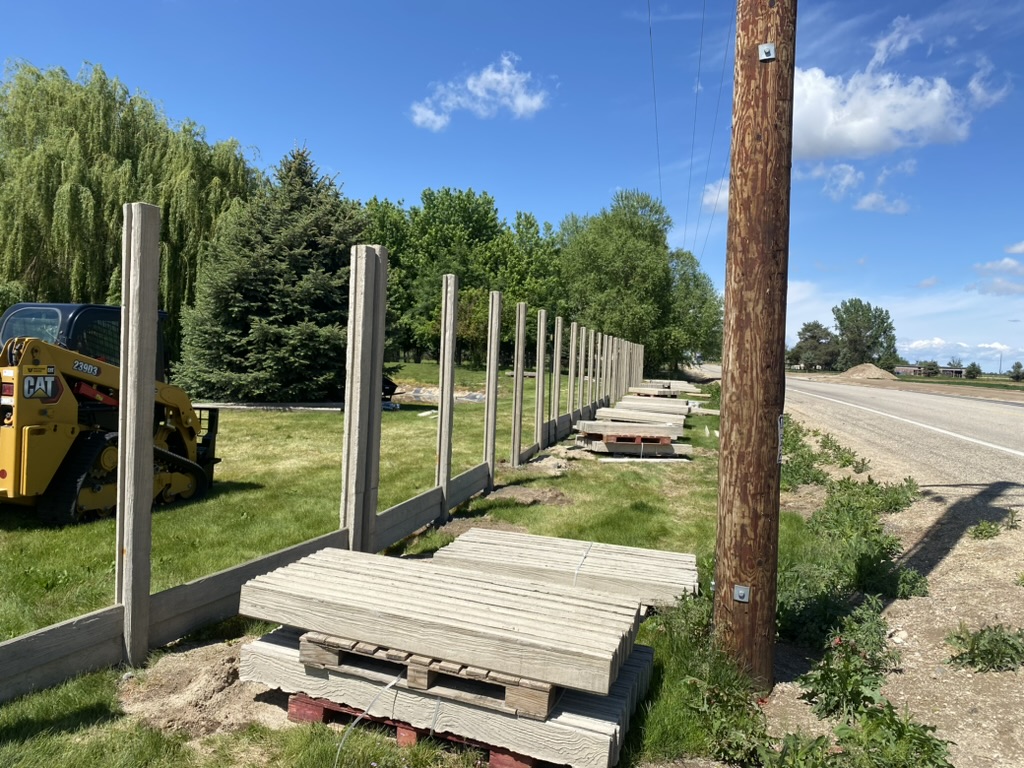
A professionally installed concrete, hybrid, or rail fence can raise property value by as much as 10%, according to LawnStarter, but that figure depends heavily on the fence actually holding up over time rather than becoming a visible maintenance issue a few years after installation. A concrete, hybrid, or rail fence from Petrified Forest Boise is built to support that value case specifically because it's backed by a lifetime warranty and manufactured in-house using a proprietary blend, so it isn't degrading in the background the way an aging wood fence can. Custom color options also let a fence complement a home's exterior rather than standing out for the wrong reasons, which matters for how a property presents to potential buyers. For Boise homeowners weighing whether a new fence is worth the investment, here's how that value case actually works and what separates a fence that adds value from one that doesn't, along with how to time the investment around a future sale.
The 10% Figure and What It Actually Depends On
According to LawnStarter, a professionally installed fence can raise property value by as much as 10%. That's a meaningful number, but it's worth understanding what it actually depends on: professional installation, a fence that's still functioning and looking good at the time of appraisal or sale, and a material choice that fits the property rather than looking out of place.
A fence that's falling apart, leaning, or clearly overdue for replacement doesn't support that same value case, and can actually work against a property's overall impression. The 10% figure describes the upside of getting it right, not a guarantee that applies to any fence regardless of condition.
It's also worth noting that this figure describes an average across many types of properties and fence installations, not a precise formula for any single home. Treat it as a directional signal that a well-installed fence tends to help rather than a guaranteed dollar amount for your specific property.
Curb Appeal Versus Long-Term Durability
It's tempting to think about fence value purely in terms of curb appeal, how the fence looks on the day it's installed. But value that holds up over years of ownership depends just as much on durability as it does on initial appearance. A fence that looks great for the first few years but starts warping, fading, or leaning after that isn't delivering the same long-term value as one that maintains its appearance consistently.
This is where material choice becomes a real value consideration rather than just an aesthetic one. A fence backed by a lifetime warranty is built to maintain both its structural integrity and its appearance well beyond the timeline where a maintenance-dependent material might start showing wear.
Curb appeal and durability aren't actually competing priorities, they reinforce each other over time when the right material is chosen from the start. A fence that ages well is a fence that keeps contributing to curb appeal for the entire span of ownership, not just the first season.
Why Material Choice Affects the Value Case
A concrete fence from Petrified Forest Boise won't rot, warp, or sag, and it's rated to withstand wind speeds up to 115 miles per hour, which means it's likely to look and perform the same at the point of a future sale as it did on installation day. That consistency is exactly what supports the kind of value increase LawnStarter describes.
A hybrid fence offers a similar value case with a more traditional cedar appearance, since the structural posts carry the same lifetime warranty and durability while the panels provide the visual warmth many buyers respond to. Either option is a stronger long-term value play than a fence material that requires consistent upkeep to avoid visible decline.
The common thread across both options is durability that doesn't depend on the homeowner remembering to keep up with a maintenance schedule, which removes a real point of risk from the value equation.
Custom Colors and How a Fence Presents to Buyers
Custom color options let a fence work with a home's exterior rather than against it, which matters for how a property presents overall. A fence color that clashes with the house or looks generic can undercut curb appeal even if the fence itself is structurally sound, while a well-matched color reinforces a cohesive, well-maintained impression.
This is a relatively low-cost way to maximize the value impact of a new fence, since color selection doesn't add significant cost to the project but does affect how the finished result is perceived by anyone viewing the property, including future buyers.
When an Existing Fence Becomes a Liability Instead of an Asset
An aging wood fence that's leaning, missing boards, or visibly weathered can actually detract from property value rather than add to it, since it signals deferred maintenance to a potential buyer. According to HGTV, a wood fence can last up to 20 years with proper maintenance, but a fence that hasn't received that maintenance often shows real problems well before that timeline.
Replacing a deteriorating fence with a lifetime-warrantied concrete or hybrid option converts that liability back into an asset, and does so in a way that shouldn't need to be revisited again during a typical span of homeownership.
See What a New Fence Would Look Like on Your Property
Get a free on-site estimate and explore custom color options before you decide.
Request Your Free On-Site EstimateHOA Compliance and Property Value
For homes in HOA communities, fence compliance is its own value factor. A fence that meets an HOA's requirements, whether that's a specific height, style, or color standard, avoids potential compliance issues that could complicate a future sale. Custom color options on concrete and hybrid fencing make it easier to meet those standards without sacrificing the material benefits.
Buyers evaluating a home in an HOA community are also evaluating whether existing improvements, including the fence, meet current community standards, so compliance itself becomes part of the value equation.
Making the Investment Decision for Your Property
Whether a new fence makes sense as a value-adding investment depends on your specific property, existing fence condition, and how long you plan to stay before selling. If your current fence is already showing real wear, replacing it with a durable, warrantied option is a reasonable way to convert that investment into long-term value rather than a recurring expense.
A free on-site estimate is the best way to understand what that investment actually looks like for your property, including material options, custom color choices, and realistic cost expectations before you commit to a project.
How Fence Value Compares to Other Home Improvements
A new fence sits alongside a handful of other exterior improvements homeowners commonly consider for value, landscaping, exterior paint, and driveway work among them. What separates fencing from several of these is how directly it affects both function and appearance at the same time: a fence provides security and privacy while also being one of the most visually prominent features of a property's exterior.
Unlike some cosmetic improvements that mainly affect curb appeal, a durable fence continues delivering functional value, security, boundary definition, noise reduction, for as long as it's installed, which is part of why LawnStarter's 10% figure holds up as a reasonable estimate across different types of properties.
What Real Estate Professionals Tend to Notice About Fencing
Fencing condition is one of the details that tends to stand out during a walkthrough, precisely because it's both highly visible and directly tied to a property's usability. A fence in poor condition can raise immediate questions about what else on the property might have been neglected, while a well-maintained, professionally installed fence tends to reinforce a positive overall impression.
This dynamic is part of why fence condition often comes up in property evaluations even when it isn't the primary factor in a sale. It's a visible signal of how well a property has been maintained overall, for better or worse.
Thinking About Selling in the Next Few Years?
Talk through which fence investment makes the most sense for your timeline.
Call or Text (208) 738-9154Timing a Fence Investment Around a Future Sale
If you know you'll be selling within the next few years, it's worth thinking about fence timing the same way you'd think about any other improvement: does the investment have time to pay off before the sale, and will the fence still look and perform well at that point. A lifetime-warrantied concrete or hybrid fence installed now will still be performing at full strength years from now, which removes the timing risk that a lower-durability option might carry.
This is different from a cosmetic improvement that might need to be refreshed again before a sale. A fence backed by a lifetime warranty doesn't carry that same risk of looking dated or worn by the time you're ready to list the property.
How This Value Case Applies Across Different Property Types
The value case for a durable, well-installed fence applies to more than just standard residential properties. Agricultural and larger acreage properties often see fencing, including rail fence systems, as functionally necessary rather than optional, which means a durable, warrantied system supports both usability and resale value simultaneously. Commercial properties benefit similarly, since a well-maintained perimeter fence contributes to a professional overall impression for customers, employees, and potential buyers of the business property itself.
In each case, the underlying principle is the same: a fence that continues to look and perform well supports property value more reliably than one that requires ongoing attention to avoid becoming a visible liability.
Getting an Estimate With Value in Mind
If property value is a specific motivation behind a new fence project, it's worth mentioning that directly during your on-site estimate. Petrified Forest Boise can help identify which material and color choices are likely to support that goal most effectively for your specific property and neighborhood, rather than defaulting to a generic recommendation. Looking at feedback from other homeowners who've gone through the same decision can also help clarify what's realistic.
This is a reasonable thing to be upfront about, since a fence chosen with resale value specifically in mind might look slightly different than one chosen purely around personal preference, and it's easier to plan for that from the beginning than to reconsider partway through the decision.
The Bottom Line on Fence Value for Boise Homeowners
A new fence can genuinely support property value, but that outcome depends on choosing a material and installer that will still be performing well years down the road, not just on installation day. A lifetime-warrantied concrete or hybrid fence removes much of the uncertainty from that equation compared to a fence that depends on consistent maintenance to avoid becoming a liability.
Whether you're planning to stay in your home for decades or preparing for a sale in the next few years, that durability is what actually supports the kind of value increase LawnStarter describes, rather than the fence material or color alone.
The clearest way to know whether this investment makes sense for your specific property is to see real options in person and get an honest number, rather than guessing at value from general statistics alone.
Frequently Asked Questions
According to LawnStarter, a professionally installed fence can raise property value by as much as 10%, though that depends on the fence being well-installed and holding up over time.
Yes. A fence that maintains its appearance and structure, like a lifetime-warrantied concrete or hybrid fence, supports that value case better than a fence prone to visible wear.
Yes. A leaning or visibly worn fence can signal deferred maintenance to potential buyers and detract from overall curb appeal.
They can. A fence color that complements the home's exterior reinforces a cohesive, well-maintained impression, which supports the overall value case.
Yes. A fence that meets HOA height, style, or color requirements avoids potential compliance issues that could complicate a future sale.


